

Support at Home

Support at Home
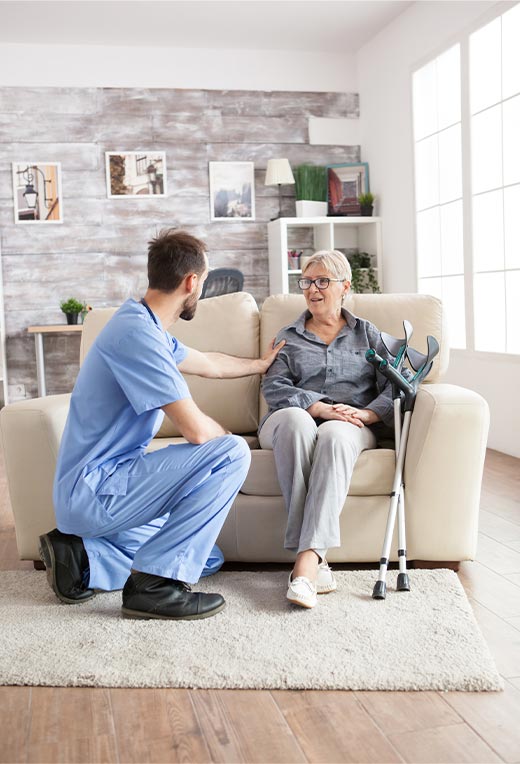
The Support at Home program was introduced in November 2025, replacing the Home Care Packages Program and the Short-term Restorative Care Programme. It improves access to services, products, equipment, and home modifications to help you remain living independently at home for longer.
Support at Home can be an option if you need a coordinated approach to the delivery of your help at home. Perhaps because you need help with many everyday tasks, or the care you need is more complex or intensive.
What does Support at Home provide?
Under Support at Home, you have access to a defined list of services to support you to live at home for longer.
This can include support for:
- clinical supports, such as nursing care, occupational therapy, and podiatry
- independence, such as help with showering, taking medications, transport, and respite care
- everyday living, such as cleaning, gardening, shopping, or meal preparation.
It also includes services that support culturally safe care, such as help to join in cultural activities and access to Aboriginal and Torres Strait Islander health practitioners and health workers.
Ongoing care
IIf you are approved to receive ongoing Support at Home services, you will be assigned one of 8 classifications with funding. This will depend on your care needs and includes funding for care management. You may need help with everyday tasks such as cleaning, meals, and getting around. If you have complex or higher needs, you may need nursing care or in-home physiotherapy, for example. If you have complex needs, you will have access to more care in the home, helping you to stay home for longer.
Short-term pathways
As well as ongoing care, Support at Home offers 3 short-term pathways.
Restorative Care Pathway
The Restorative Care Pathway is short-term care to help you regain function and stay independent through accessing coordinated allied health and/or nursing services. It lowers the need for more intensive ongoing services and helps you to do the activities you enjoy.
Assistive Technology and Home Modifications (AT-HM) scheme
The Assistive Technology and Home Modifications (AT-HM) scheme gives you upfront funding to make your home safer or more accessible. It gives you access to products, equipment and home adjustments to meet your assessed needs.
End-of-Life Pathway
The End-of-Life Pathway will support you to remain at home and provide additional care in your last 3 months of life. You can be referred for a high-priority assessment for the End-of-Life Pathway, even if you’re not already part of the Support at Home program.
You can get assistance with a range of different services under Support at Home.
Domestic assistance
Help with general cleaning, shopping, laundry, and other jobs around your home.
Home maintenance and repairs
Services to keep your home and garden safe and liveable.
Meals
Providing safe and appetising food and drink to help you continue to eat well and stay hydrated.
Social support and community engagement
Help to stay connected with your community and culture, in person or online.
Transport
Help getting you to appointments, events, and everyday errands.
Care management
Help making, co-ordinating, and reviewing your ongoing care plan.
Restorative care management
Help making, co-ordinating, and reviewing your restorative care plan.
Personal care
Services if you need help with bathing, hygiene, dressing, mobility, and communication.
Nursing care
Providing you clinical care, treatment, therapy, and intervention.
Allied health and therapy
Healthcare professionals, such as podiatrists and physiotherapists, who prevent, diagnose, treat, and rehabilitate people.
Therapeutic services for independent living
Acupuncture, remedial massage, and other therapies to support your health and well-being.
Nutrition
Dietary support, supplements, and equipment to help you get the nutrition you need, orally or through tube feeding.
Equipment and products
Walkers, shower chairs, and other equipment to help you with daily activities.
Home adjustments
Handrails, ramps, and other changes to help you live safely at home.
Home or community general respite
Support at home, in a centre, or at an aged care home to give you and your carer a short break.
If you’re approved for Support at Home, you will receive a letter explaining the services and funding you’re approved for. This includes any approvals for ongoing or short-term care based on your assessed needs.
When your funding comes through, you can then choose a service provider that is right for you. Services are provided by a variety of organisations across Australia.
You and your chosen provider will discuss the mix of services to meet your assessed needs and budget. You can ask to change this mix at any time. You can also ask for a reassessment if your needs change.
Your funding wait times depend on the services you were approved for and your priority category.
Funding is allocated separately for each approved service so you can start using a service as soon as its funding is available and you’ve signed a service agreement. This applies even if you’re still waiting for funding for your other approved services.
Learn more about funding wait times and starting services.
You will need to contribute towards the cost of your services, based on the service being delivered and what you can afford. You may also have to provide information about your income and assets to Services Australia to work out exactly how much you will be asked to contribute. Under Support at Home, you only pay contributions on the services you have received. You won’t contribute to any clinical support costs.
Learn more about Support at Home costs and fees.
Faye received support to help with swallowing
Faye's care worker Justin noticed that she seemed to be having trouble eating and suggested it might be a good idea to get some advice. Faye spoke to her care partner, Lauren, who helped her access additional services.
How respite care helped improve George and Mei’s health and wellbeing
After many months of caring for his wife Mei, George began to feel run down. Mei had dementia, and as her condition worsened, George realised they needed some extra support.
As Judy’s dementia developed, support and changes around the house helped
When Judy’s dementia was first diagnosed, her symptoms were mild. But over the years, her short-term memory declined. So her husband called My Aged to find out what support might be available.
How home respite helped Phuong and Harry balance health, home, and social time
Phuong was her husband Harry's full-time carer. But her own health began to suffer, and it became hard to balance caring, daily duties, and looking after her own wellbeing. So she called My Aged Care.
Sarah’s skin integrity improved with nursing care
When Sarah recovered from a fall that had her in a wheelchair for over a month, she realised she still needed some help. She organised an aged care assessment through My Aged Care.
Seo-Yeon found herself in good hands with care partner, Nari
When Seo-Yeon was approved for the Support at Home program, she searched for a provider that could provide the services she needed, including workers that spoke Korean and knew her culture.
Getting extra support around the home helped to manage Stella’s Parkinson’s
As Stella's Parkinson’s disease worsened, she and her husband John worried they wouldn’t be able to manage things. So he called My Aged Care to see if they could get some support.
How help at home supported Uncle Charlie’s changing care needs
At first, Uncle Charlie only needed meals. But when his mobility declined, he and his daughter Tess talked to their health clinic nurse who helped them arrange an assessment through My Aged Care.
How do I access Support at Home?
An aged care assessment will determine if you are eligible for ongoing or short-term Support at Home services. If you meet the requirements, you can apply for an assessment straight away.